
The India’s World Book Prize for International Relations (IWBP – IR) has been conceived as a new platform to recognise and reward exceptional non-fiction works that combine rigorous scholarship, originality of thought, and relevance to contemporary global affairs, while remaining accessible to policy and informed public audiences.
At a time when India’s global role is expanding across diplomacy, security, economy, and governance, there remains no dedicated book prize in the country focused exclusively on International Relations with India at its core. IWBP – IR seeks to address this gap by fostering public-facing, policy-relevant scholarship and by positioning India as a key intellectual hub for global IR debates.
India’s World is a magazine and website for international affairs with an Indian perspective. It is India’s premier platform for incisive and independent discussions on international affairs. Inaugurated by Hon’ble External Affairs Minister Dr. S. Jaishankar in December 2024, the magazine brings together global and Indian perspectives on diplomacy, strategy, and foreign policy.
The Sushma Swaraj Institute of Foreign Service is India’s Premier institution for training diplomats. It was established in 1986 by the Ministry of External Affairs, Government of India. It plays a vital role in shaping the country’s foreign policy apparatus through rigorous academic and practical instruction. The Dean of SSIFS will chair the jury for this competition.
The Jury comprises of distinguished members, representing a balanced mix of academics, policy practitioners, and senior editors, with geographic and institutional diversity.
The Selection follows a four-stage process: Submission → Longlist → Shortlist (Top 5) → Top 3 Winners to be announced at India’s World Conclave in December 2026.
Former National Security Advisor of India; Former Foreign Secretary
Former High Commissioner of India to Pakistan; Former Director General, ICWA
Historian and Author
Director of Indo-Pacific Security, Center for a New American Security, Former Deputy Assistant to the President and NSC Senior Director for South and Central Asia
Diplomatic Affairs Editor, The Hindu
Chair, Editorial Advisory Board, India’s World
Professor of International Relations, Griffith University; Former Director, Griffith Asia Institute
Dean, School of Humanities and Social Sciences; Professor of Economics, Shiv Nadar University
We would also like to share the recognition and opportunities being offered to the three winning authors, all of which will carry the endorsement of the full Jury Panel:
Submissions will be assessed by an independent Jury on the basis of
India’s Next Generation Strategic Thinkers 2025 were felicitated at the India’s World Annual Conclave 2025 in Association with the Ministry of External Affairs by Amb. Raj Kumar Srivastava, the Dean of Foreign Service Institute, Chair of the Jury and Prof. Happymon Jacob, Founder and Editor, India’s World.
Lokendra Sharma is a Staff Research Analyst working with the High-Tech Geopolitics Programme at the Takshashila Institution in Bengaluru. Broadly interested in technology geopolitics, he closely follows and writes about developments in cyber and nuclear domains. At Takshashila, he focuses on technological sovereignty and explores how India can script her technological future. He has bylines in The Hindu, India’s World, South Asian Voices, Moneycontrol, NDTV and Deccan Herald among other platforms. He has also published in academic journals such as the Journal of the Indian Ocean Region and Journal of Cyber Policy.
Aarushi Shekhar Barthwal is currently a student at University of Oxford pursuing her MSc in Modern South Asian Studies. She is a recipient of the Chevening Scholarship awarded by the British Foreign, Commonwealth and Development Office. Her postgraduate thesis at Oxford focuses on India’s foreign policy in the Indo-Pacific under the academic supervision of Professor Kate Sullivan. Her areas of interest include power politics of the Indo-Pacific, and non-traditional non-military securitisation in international relations.
Shreyas Shende is a Senior Research Associate at the Net Zero Industrial Policy Lab at Johns Hopkins University. He works on industrial policy and the geopolitics of the energy transition, with a regional focus on India. He was previously at Carnegie India where he managed the Director’s office and worked on South Asian security issues. He has co-authored a book chapter on the Research & Analysis Wing (R&AW), India’s external intelligence agency, and a working paper on the implications of the Taliban’s rise for India. His work has appeared in Lawfare, The Diplomat, ThePrint, South Asian Voices, among others.
1. Aadhav Krishna S
2. Aarushi Shekhar
3. Aarya Ratnakar P. Sardesai
4. Aaryan Agarwal
5. Aavanish
6. Abhinav Panwar
7. Abhishek Chotia
8. Abhishek Das
9. Aditi Chauhan
10. Aditi Saxena
11. Adwita Dixit
12. Akankshya Das
13. Akash Tiwari
14. Aman J Thomas
15. Ambuj Sahu
16. Amina Reem VP
17. Amit Kumar
18. Ammu S
19. Ananya Jagoorie
20. Anurag Inamdar
21. Anushka Saxena
22. Anushree Goel
23. Archana Girish Kamath
24. Archit Vyas
25. Arundhati Bhatia
26. Arunima Lahiri
27. Arushi Singh
28. Astitva Singh
29. Bandish Oza
30. Bantirani Patro
31. Bhavya Aggarwal
32. Binni Kumari
33. C S Yamini
34. Chaitanya Deshpande
35. Damini Verma
36. Femy Francis
37. Harisundar Kumar
38. Harshvardhan Singh Sikarwar
39. Himanshu Khanna
40. Hoimontick Gogoi
41. Ifrah Kawa
42. Jahnavi Sodhi
43. Jaishreenidhi K V
44. Jatin Gora
45. Julia Jose Thachil
46. Kaamya Daga
47. Khushi Vaid
48. Khyati Awade
49. Kiran Bisht
50. Krishanu Ranwan
51. Krutika Reddy
52. Kshitij Singh
53. Lokendra Sharma
54. Manashjyoti Karjee
55. Manav Gudwani
56. Mannya Mannya
57. Mansi sharma
58. Mehul Jaju
59. Meyitir Imsong
60. Navodita Kumari
61. Neetu Yadav
62. Nidhi Kondejkar
63. Pavithra SR
64. Prashasti Bhatnagar
65. Prisha Kirit Patel
66. Raghav Ghei
67. Rahana Sherin K V
68. Ratish Mehta
69. Renuka Sujit Jadhav
70. Rishabh Yadav
71. Ritika Singhal
72. Rohit Bhatachaarya
73. Sahil Mittal
74. Samanvaya Saraswat
75. Samik Chakraborty
76. Sanchaly Bhattacharya
77. Sanghamitra Kashyap
78. Sarmin Rahman
79. Shabrina Khan
80. Shivank Singh Chauhan
81. Shourya Singh
82. Shree Gupta
83. Shreshth Sharma
84. Shreyas Shende
85. Shubham Vishwanath Bhat
86. Siddharth Shankar
87. Somya Maan
88. Soumya JM
89. Sourav Biswas
90. Sweekriti Pathak
91. Srijan Srivastava
92. Surbhi Chakraborty
93. Sushovan Chakraborty
94. Swadha Rawat
95. Vani Dhiman
96. Vaishali
97. Ved Shinde
98. Vineeth Daniel Vinoy
99. Yamini Sharma
100. Yashvi S Barot
All applicants will be contacted for next steps.
1. Aarushi Shekhar Barthwal
2. Ambuj Sahu
3. Amit Kumar
4. Anushka Saxena
5. Bantirani Patro
6. Harisundar Kumar
7. Jahnavi Sodhi
8. Lokendra Sharma
9. Shreyas Shende
10. Surbhi Chakraborty
The top 10 finalists will be contacted for an opportunity to interact with members of our distinguished jury. Following this interaction, the jury will select the top 3 winners of the competition. All the candidates have been mentioned alphabetically and the list does not indicate any ranking.
Authors interested in being considered are requested to get in touch with their editors or publishers, who may submit the book on their behalf. Each publisher may submit up to 15 titles Maximum.
Submission Deadline – March 30, 2026
For detailed submission guidelines, required materials, clarifications, and to submit nominated book titles along with author names, publishers may write to us at – indiasworldbookprize@gmail.com / or +91 7905432911 (Vaishu Rai)
Indian nationals aged 20–30, from any academic or professional background.
Essays must connect to international affairs, strategic analysis, technology, or India’s foreign policy, aligned with the 2025 theme: How Can India Contribute to the Emerging World Order?
Yes, ₹450 per applicant. All registered participants receive a complimentary print copy of India’s World magazine.
The abstract submission is 250 words. The final essay for shortlisted candidates in 2000 words excluding references.
No. Only individual submissions are allowed.
No. Essays must be original, unpublished, and not under consideration elsewhere
Yes. Top three winners will receive a travel stipend (round-trip within India) and overnight accommodation at a partner hotel for the Conclave.
The top 100 shortlist will be announced on 1 October 2025, the final winners in November 2025, and the top three will present at the India’s World Conclave on 4 December 2025 in New Delhi.
If you’re 30 years and a few months old now, you’re still eligible as long as you are under 31 on the last date for submission.
Yes. As long as you are an Indian national within the eligible age range, you can apply regardless of whether you are studying or working in India or abroad.
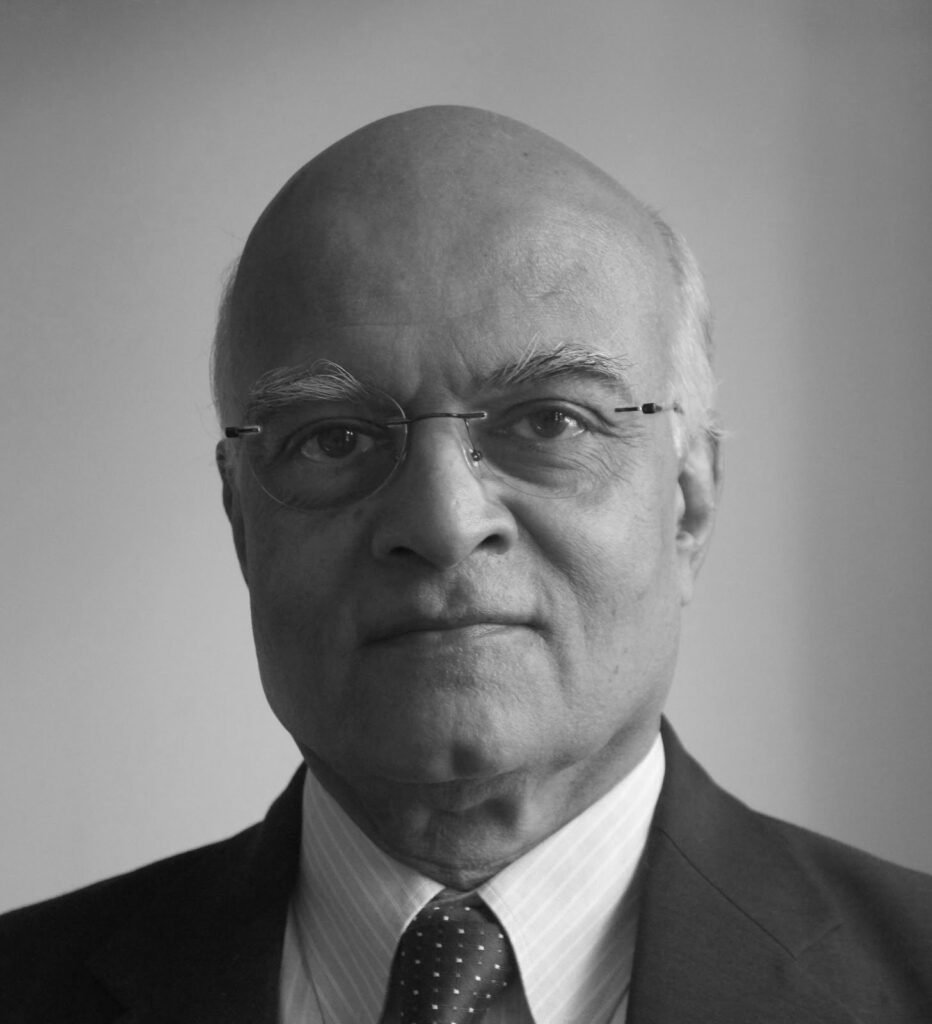
Former National Security Advisor of India; Former Foreign Secretary
Shivshankar Menon is currently visiting professor at Ashoka University, India, and Chair of the Ashoka Centre for China Studies.
He is also a Distinguished Fellow with the Centre for Social and Economic Progress, New Delhi, Trustee on the International Crisis Group, and Senior Fellow at the Kissinger Centre, John’s Hopkins University.
He was National Security Advisor to the Prime Minister of India, Jan 2010-May 2014; Foreign Secretary of India, October 2006-July 2009; and has served as the Indian Ambassador or High Commissioner to China, Pakistan, Sri Lanka and Israel.
He has published “Choices; Inside the Making of Indian Foreign Policy” (2016), “India and Asian Geopolitics; The Past, Present” (2021), and “India in a World Adrift” (2025).
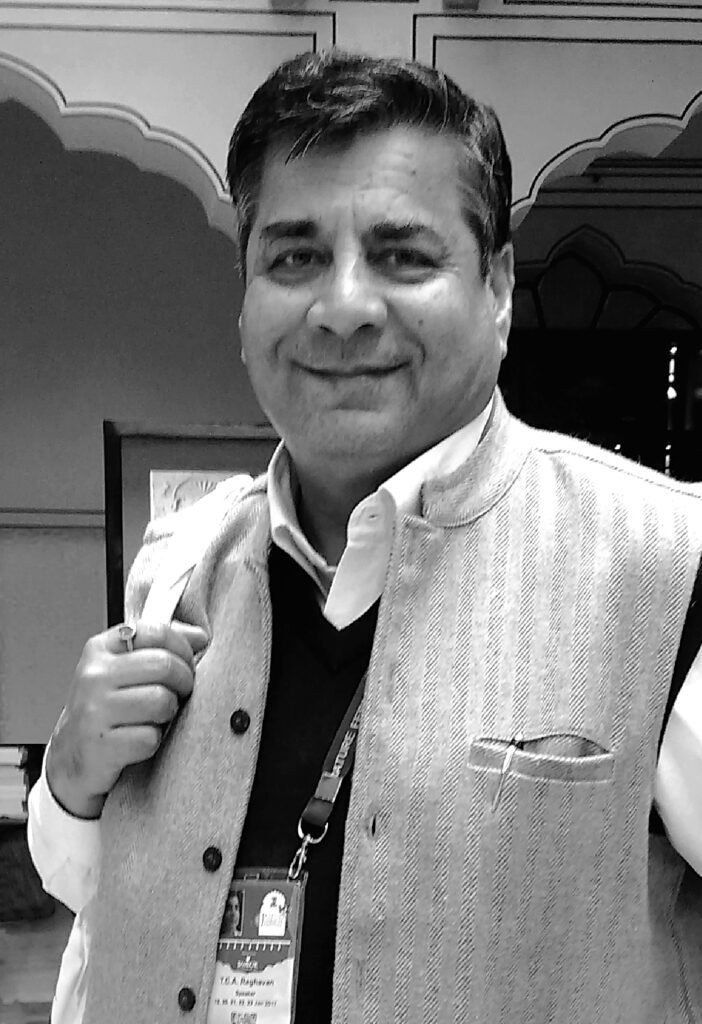
Former High Commissioner of India to Pakistan; Former Director General, ICWA
T C A Raghavan is a former Indian High Commissioner to Pakistan (2013-15). He had earlier served as Deputy High Commissioner in Pakistan (2003-2007) and High Commissioner to Singapore from 2009 to 2013. He was Director General of the Indian Council of World Affairs, New Delhi from 2018 to 2021. He the Joint Secretary dealing with Pakistan, Afghanistan and Iran in the Ministry of External Affairs from 2007 to 2009. He is a member of the Governing Council of the Institute of Peace and Conflict Studies, New Delhi, Adjunct Professor, School of Conflict and Security Studies, National Institute of Advanced Study, Bangalore and Visiting Professor, Centre for South Asian Studies, School of International Studies, Jawahar Lal Nehru University.
He was awarded a PhD by the Jawaharlal Nehru University in 1992. He is a recipient of the Jadunath Sarkar Gold Medal for 2024 by the Asiatic Society, Calcutta.
He is the author of a number of well received history books : Attendant Lords, Bairam Khan and Abdur Rahim – Courtiers and Poets in Mughal India (HarperCollins, 2017) awarded the Mohammad Habib Memorial Prize by the Indian History Congress in December 2017; ‘The People Next Door- The Curious History of India’s Relations with Pakistan’, (Hurst & Co, 2017); History Men: Jadunath Sarkar, G S Sardesai, Raghubir Sinh and Their Quest for India’s Past (HarperCollins, 2020) and (coauthored) Sapru House, A Story of Institution Building in World Affairs (ICWA, 2021). His latest book is Circles of Freedom: Friendship, Love and Loyalty in the Indian National Struggle (Juggernaut, 2024).
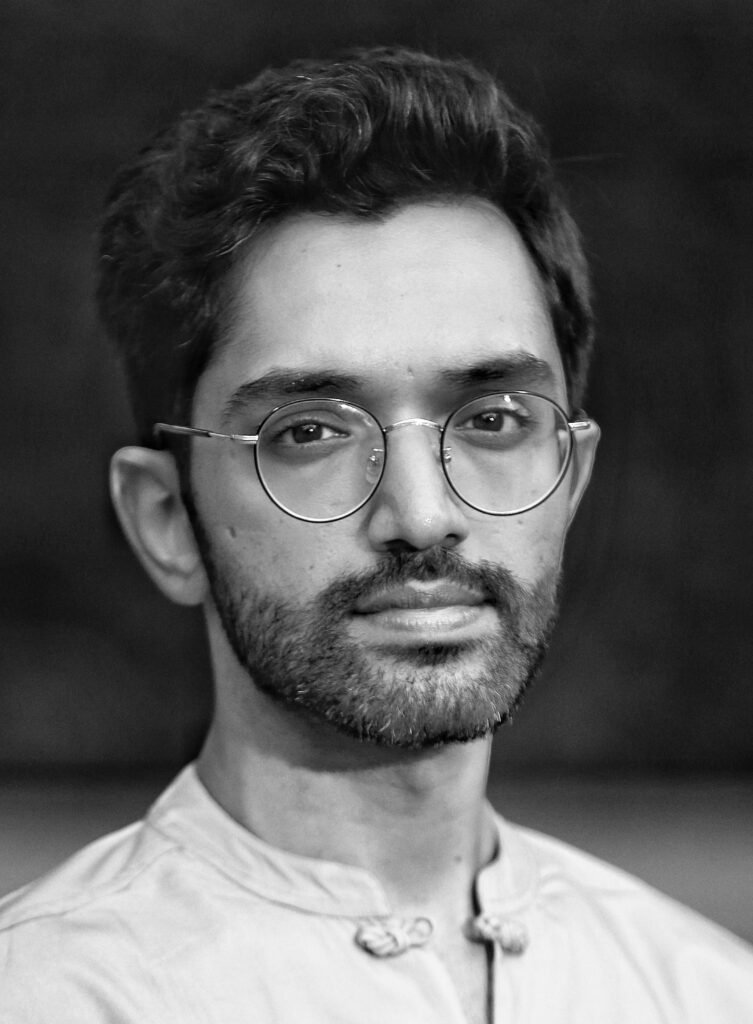
Historian and Author
Manu S. Pillai is a historian and the author of five books, most recently Gods, Guns & Missionaries: The Making of the Modern Hindu Identity. A winner of the Sahitya Akademi Yuva Puraskar for his first book, The Ivory Throne, he is also a columnist at Mint Lounge. Manu holds a PhD in history from King’s College London, and is a winner of several other awards including the Crossword Book Prize, the Muse India Young Writer Award, and the Tata Lit Live Prize.
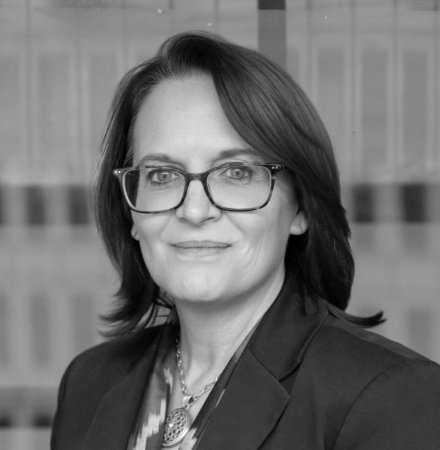
Director of Indo-Pacific Security, Center for a New American Security, Former Deputy Assistant to the President and NSC Senior Director for South and Central Asia
Lisa Curtis is Director of the Indo-Pacific Security Program at the Center for a New American Security. She is a foreign policy and national security expert with over 20 years of service in the U.S. government. Her work has centered on U.S. policy toward the Indo-Pacific, particularly South Asia. From 2017 to 2021, Curtis served as Deputy Assistant to the President and Senior Director for South and Central Asia at the NSC. During her tenure at the NSC, she coordinated U.S. policy development and implementation of the South Asia Strategy signed by President Trump in August 2017 and the U.S. Strategy for Central Asia 2019-2025, which was published by the State Department in January 2020. She also contributed to the Indo-Pacific Strategic Framework and coordinated policies designed to strengthen the U.S.-India partnership, resulting in a widely recognized elevation of the relationship. Curtis received the Secretary of Defense Medal for Outstanding Public Service in December 2020 in recognition of her work at the NSC.
From 2006 to 2017, Curtis was Senior Fellow on South Asia at The Heritage Foundation, where she appeared regularly in the media and provided frequent Congressional testimony. She also served as Professional Staff Member on the Senate Foreign Relations Committee (2003 to 2006), Senior Advisor in the South Asia Bureau at the State Department (2001 to 2003), senior analyst on South Asia at the CIA (1996 to 2001), and as a diplomat at the U.S. Embassies in Pakistan and India (1994 to 1997).
Curtis has published commentary in Foreign Affairs, Foreign Policy, CNN.com, NPR.org, and other media outlets and has made multiple appearances on CNN, Fox News, BBC, PBS, MSNBC, and C-SPAN. She is currently Board Chair of Radio Free Europe/Radio Liberty, Board Member of Women for Afghanistan, Member of the Leadership Council of Women in National Security (LCWINS), and a Member of the Council on Foreign Relations.
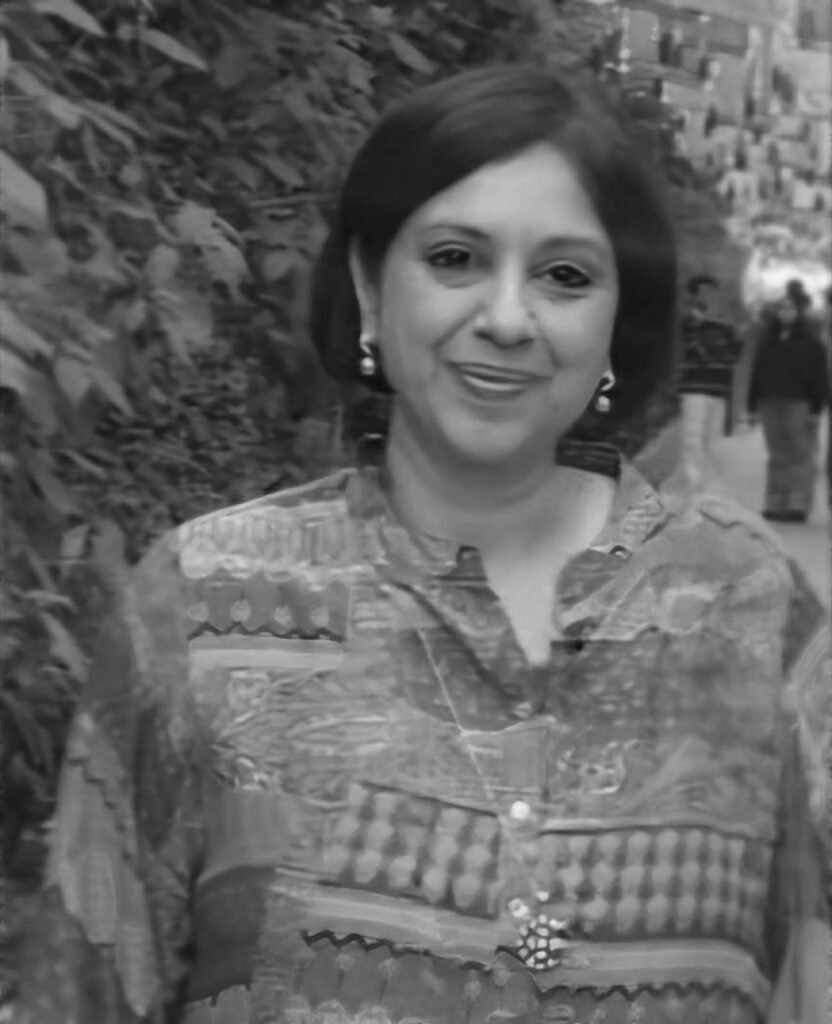
Diplomatic Affairs Editor, The Hindu
Suhasini Haidar is the Diplomatic Editor of The Hindu, where she writes on foreign policy and anchors the weekly show WorldView. She has nearly three decades of experience, including roles as Foreign Affairs Editor and anchor at CNN-IBN and as Correspondent for CNN International. Recipient of numerous awards, she has reported on major conflicts across South Asia and the Middle East.
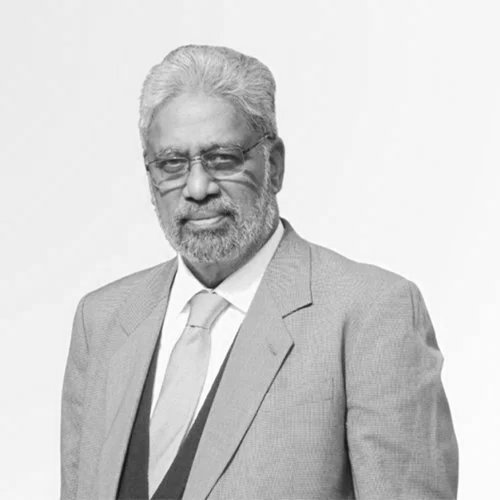
Chair, Editorial Advisory Board, India’s World
Prof. Mohan is a Distinguished Professor & Senior Fellow Designate, MJIAS, and a Visiting Research Professor at the Institute of South Asian Studies (ISAS), National University of Singapore, and was previously the Director of ISAS. Raja Mohan was the founding director of Carnegie India in Delhi, the sixth international center of the Carnegie Endowment for Peace. He was associated with several Indian think tanks, including the Institute of Defense Studies and Analyses, the Observer Research Foundation, and the Center for Policy Research in New Delhi. He was a Professor of South Asian Studies at the Jawaharlal Nehru University, New Delhi, and the Rajaratnam School of International Studies, Singapore. He served on India’s National Security Advisory Board and was the Henry A. Kissinger Chair in Foreign Policy and International Relations at the Kluge Center, US Library of Congress, Washington, DC, during 2009-10. He convened the India chapter of Pugwash Conferences on Science and World Affairs from 1995 to 2005. He has published widely on India’s foreign and security policies, Asian geopolitics, and the global governance of advanced technologies. He is a columnist for Foreign Policy and the Indian Express.
Professor of International Relations, Griffith University; Former Director, Griffith Asia Institute
Ian Hall is a Professor of International Relations at Griffith University, Queensland, Australia. He is also an honorary fellow of the Australia India Institute at the University of Melbourne and an Executive Editor of the journal Asian Security. Prior to joining Griffith University, he taught at St Andrews, the University of Adelaide, and the Australian National University, and served as a co-editor of the Australian Journal of International Affairs. He holds degrees from the University of Oxford, the University of St Andrews, and the Australian National University.
Professor Hall’s research focuses on India’s foreign and security policies, as well as on the intellectual history of international relations. He has written three books and edited several more, and published scholarly articles in several prominent international journals, including the European Journal of International Relations, International Affairs, and Third World Quarterly.
His research has been funded by grants from the Australian Research Council, the Australian Department of Defence, and the Department of Foreign Affairs and Trade. He has participated in multiple dialogues involving officials and experts from India, Indonesia, Japan, Malaysia, Pakistan, the Philippines, and the Republic of Korea, and with the generous support of the Ministry of Foreign Affairs of Japan ran an annual Australia-India-Japan Trilateral until 2023. He is often quoted in the media.
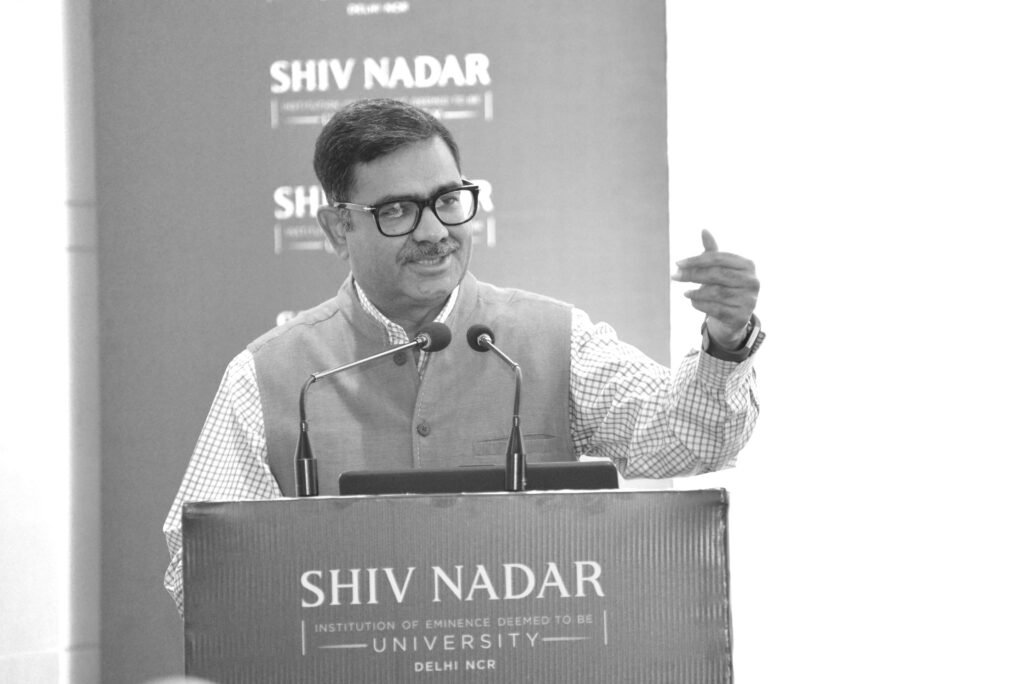
Dean, School of Humanities and Social Sciences; Professor of Economics, Shiv Nadar University
Rajat Kathuria is Dean of the School of Humanities and Social Sciences and Professor of Economics at Shiv Nadar University. He holds a Ph.D. in Economics from the University of Maryland, College Park and degrees from the Delhi School of Economics and St. Stephen’s College, Delhi.
Before joining Shiv Nadar University in 2021, Professor Kathuria served as Director and Chief Executive of the Indian Council for Research on International Economic Relations (ICRIER) from 2012 to 2021, steering India’s leading independent think tank through a period of significant global economic transformation. His career spans three decades across academia, policy advisory, and international institutions. He held senior positions at TRAI—the Telecom Regulatory Authority of India including Economic Advisor contributing to India’s telecommunications revolution during its formative years.
His research traverses international trade, regulation and competition policy, the digital economy, and climate economics. He has served on numerous government committees, including the Ministry of Environment’s Implementation Committee for Intended Nationally Determined Contributions (INDC), the Confederation of Indian Industry’s Committee on International Trade Policy, and advisory roles with the Competition Commission of India and the National Statistical Commission. His work has informed policy at the highest levels while maintaining rigorous academic standards.
Professor Kathuria has published in peer-reviewed journals and authored several books on trade, telecommunications, and economic development. He writes regularly for leading newspapers engaging public discourse on economic policy.
He has spoken at international forums including the OECD, World Bank, BRICS, G20 among others and serves on editorial boards of academic journals. Professor Kathuria represented India in international table tennis tournaments from 1981 to 1987, competing at World, Commonwealth, and Asian championships.
For shortlisted candidates
Top 10 Finalists
New Delhi